
One to One MCA Oral Coaching That Works
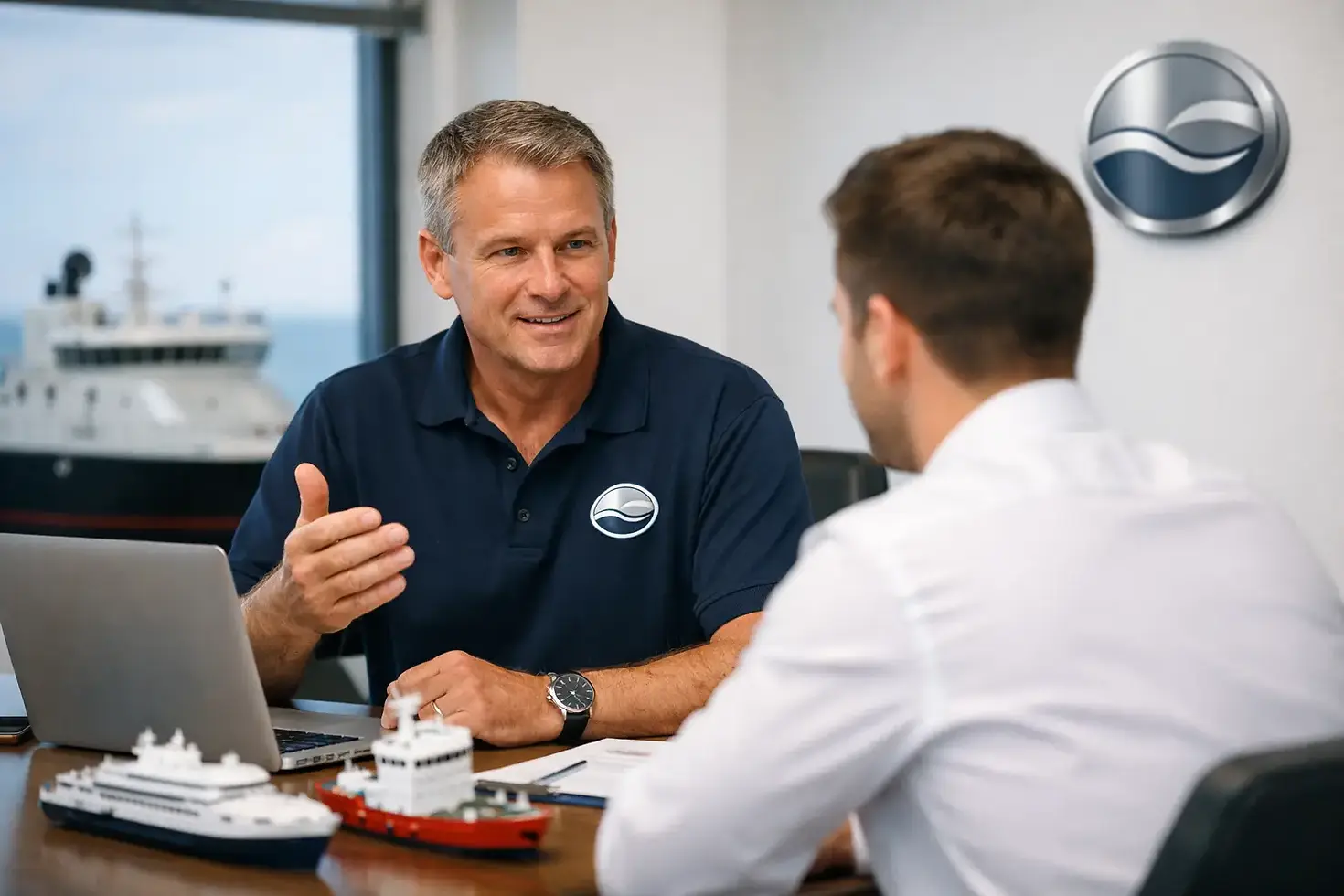
Most candidates do not fail the MCA oral because they have done no study. They struggle because the oral is not a written paper spoken aloud. It tests judgement, structure, technical accuracy and how well you respond under pressure. That is exactly why one to one MCA oral coaching has become a serious advantage for engineer officers who want preparation that matches the exam rather than generic revision.
For EOOW, Second Engineer, Chief Engineer and ETO candidates, the gap is rarely just knowledge. More often, it is weak verbal delivery, inconsistent technical recall, poor answer structure, or difficulty applying regulation and practice to a live scenario. A candidate may know the system perfectly well in the engine room, then give a vague or incomplete answer when questioned by an examiner. Good coaching addresses that gap directly.
Why one to one MCA oral coaching suits this exam
The MCA oral is personal by nature. The examiner will probe your experience, your certificate level and your ability to explain engineering decisions clearly. Group courses can help with broad revision, but they cannot fully adapt to your sea time, vessel type, previous oral attempts or specific weak areas.
That is the main strength of one to one coaching. It allows the training to be built around the candidate rather than the other way round. An EOOW candidate who needs stronger fundamentals in fuel, lubrication and watchkeeping requires a different approach from a Second Engineer refining management-level answers on legislation, planned maintenance, emergencies and leadership. Treating both in the same way wastes time.
There is also the question of honesty. In a one to one setting, weak areas appear quickly. If your answer lacks structure, if your safety reasoning is thin, or if you drift away from the actual question, that can be challenged immediately. It is not always comfortable, but it is useful. The oral rewards disciplined thinking, not vague confidence.
What good one to one MCA oral coaching should cover
The best coaching is not a stream of model answers. It should develop the way you think, speak and justify decisions at your certificate level.
Technical recall under pressure
Many engineers know more than they can express on demand. Under oral conditions, recall often becomes fragmented. You might remember parts of a purification sequence, a steering gear test, or the actions after a crankcase alarm, but not present them in a safe and professional order.
Coaching should train recall in a way that reflects the live exam. That means repeated questioning, follow-up prompts, scenario changes and pressure testing. The aim is not rote learning. It is to make your technical knowledge usable when challenged.
Answer structure and exam discipline
A strong answer usually follows a clear path. You identify the issue, explain the risk, describe immediate actions, refer to system knowledge or statutory duty, and then show ongoing control. Candidates who jump straight into detail often lose marks because the examiner cannot see the logic.
One to one work helps build that discipline. You learn how to start cleanly, keep the answer at the right level and avoid talking yourself into trouble. This matters particularly at Second Engineer and Chief Engineer level, where the examiner expects more than machinery knowledge. They expect prioritisation, leadership and sound engineering judgement.
Communication, not just competence
The oral is not a test of personality, but communication matters. If your explanation is hesitant, muddled or overly informal, the examiner may question whether your understanding is secure. That can happen even when your experience at sea is good.
A proper coaching process sharpens how you speak. It helps you give direct, professional answers using correct terminology without sounding rehearsed. That balance matters. Scripted delivery can collapse the moment the examiner changes the wording of a question.
Where candidates usually lose ground
The common assumption is that failure comes from not revising enough. In reality, several patterns appear again and again.
One is over-reliance on notes. Candidates may spend weeks reading but very little time speaking answers aloud. Another is studying too broadly, covering large amounts of theory without tying it to MCA oral style questioning. There is also a tendency to focus on favourite subjects while avoiding weaker areas such as electrical safety, legislation, permits to work, pollution response or oral-level fault diagnosis.
Some candidates are technically strong but do not answer at the right certificate level. An EOOW answer can become too shallow. A management-level answer can become too operational. Both create problems. One to one MCA oral coaching is valuable because it corrects level, not just content.
One to one MCA oral coaching for different certificate levels
Not every candidate needs the same intensity or focus. That is where bespoke preparation makes sense.
EOOW candidates
At EOOW level, coaching often needs to strengthen core understanding and verbal discipline. Examiners want safe watchkeeping, sound system knowledge, emergency response and an ability to explain routine and abnormal operations clearly. Candidates can know the job practically but still struggle to express first actions, reporting lines or the reasoning behind them.
Second Engineer candidates
At Second Engineer level, the standard rises significantly. The examiner expects management awareness, defect handling, maintenance control, statutory knowledge and stronger judgement. Answers must show not just what you would do, but how you would control risk, manage personnel and maintain compliance.
Chief Engineer and ETO candidates
For Chief Engineer candidates, the oral becomes more about command-level responsibility, policy, accountability and engineering leadership. For ETO candidates, the challenge is often translating specialist technical knowledge into concise oral answers that meet the MCA standard. In both cases, tailored coaching matters because broad classroom delivery often misses the nuances.
Why generic revision is not always enough
There is still a place for revision courses, textbooks and question banks. They help build breadth. But breadth alone does not guarantee oral performance.
The trade-off is straightforward. Group provision can be efficient and useful for overview, especially if you are early in preparation. One to one coaching is usually more precise, more demanding and more relevant when the exam date is approaching or when a previous attempt exposed specific weaknesses. For many candidates, the best route is not one or the other. It is broad revision first, then focused oral coaching to convert knowledge into pass-standard performance.
That distinction matters. A candidate rarely needs more information for its own sake. They need better application of the information they already have.
What to expect from a serious coaching process
A credible provider should not simply reassure you that you are doing fine. They should assess you against the oral standard, identify where performance breaks down and coach you in a structured way.
That usually starts with questioning that exposes your current level honestly. From there, the sessions should target technical gaps, improve answer structure and rehearse live oral conditions. Good coaching also adapts over time. If one area improves, attention should move to the next limiting factor.
This is where a mentoring-led approach adds value. Candidates do not just need correction. They need to understand why an answer worked, why another fell short and how to improve consistently. At TST Engineering Services, that standard of preparation is built around certificate level, oral performance and the expectations set by the MCA framework rather than generic classroom teaching.
Choosing the right support
If you are considering one to one MCA oral coaching, ask whether the support is actually exam-focused. There is a difference between marine engineering tuition and oral preparation. One builds knowledge. The other builds performance in front of an examiner.
Look for coaching that is aligned to your certificate, grounded in current expectations and willing to challenge weak answers properly. Convenience alone is not enough. Neither is general industry experience if it is not translated into oral exam preparation.
You should also be realistic about timing. Candidates who leave coaching until the final week often make progress, but deeper improvements in answer discipline and confidence usually need longer. If you know verbal delivery is a weakness, address it early.
The MCA oral is one of the few parts of the pathway where your knowledge, judgement and communication are examined in real time. That is why tailored preparation matters. When the support is specific, disciplined and honest, confidence stops being guesswork. It becomes the result of knowing you can answer clearly, think under pressure and meet the standard expected of the certificate you are pursuing.
If your next step in the certification pathway matters, prepare in a way that reflects the exam you are actually going to face.


Comments