

IMO Model Course Engineering Oral: What Matters
If you are searching for an IMO model course engineering oral route into MCA preparation, the first point to be clear on is this: the oral exam is not passed by reciting a syllabus. It is passed by showing safe judgement, technical understanding, and the ability to answer like an engineer who can be trusted with the watch, the plant, and the consequences.
IMO Model Course Engineering Oral
For UK candidates working towards EOOW, Second Engineer or Chief Engineer certification, that distinction matters. The MCA oral, conducted against the expectations set out in MIN 654 and the relevant notice framework, is not simply a classroom knowledge check. It is an assessment of competence under questioning. That is where many candidates misunderstand the value of any IMO model course material.
What the IMO model course engineering oral actually gives you
The IMO model course approach is useful because it gives structure. For a candidate who has come through sea service with uneven exposure - perhaps strong on machinery operation but lighter on legislation, or competent on planned maintenance but less confident on emergency questioning - structure matters. It helps identify the broad themes an examiner is likely to expect you to understand.
In practical terms, model course material usually supports revision across core engineering areas such as propulsion, auxiliary machinery, electrical systems, pollution prevention, safety management, emergency procedures and watchkeeping. That is valuable, especially for candidates whose onboard experience has been vessel-specific.
A tanker engineer, for example, may be highly competent with cargo-related systems and inert gas arrangements but weaker on plant found more commonly discussed in dry cargo oral scenarios. Likewise, a candidate from a modern UMS vessel may answer well on alarm response logic, yet hesitate when asked how they would manage a prolonged manual watch after automation failure. A structured course can expose those gaps quickly.
That said, the model course is a framework, not a substitute for oral readiness.
Where candidates go wrong with IMO model course engineering oral preparation
The most common mistake is treating the material as if the examiner is working through a tick-box list. He is not. He is listening for depth, decision-making and whether you understand consequences.
If you are asked about a purifier not starting, a weak answer lists interlocks. A stronger answer explains the immediate checks, confirms isolation and bowl condition, considers feed temperature and water supply, and then discusses what operational risk follows if fuel treatment capacity is compromised. That is the difference between someone who has read notes and someone who thinks like an engineer.
The same applies to safety questions. If you are asked about enclosed space entry, the examiner is rarely satisfied with a memorised sequence alone. He wants to know whether you understand atmosphere testing, permit controls, rescue readiness, communication, and what changes if the task overruns or conditions alter. He may then push further - who is in charge, what records are required, what equipment is suitable, and when the job should be stopped.
This is why an IMO model course engineering oral plan must be adapted to MCA questioning style. The UK oral is conversational, but it is not informal. It is designed to test whether you can move from principle to action without losing technical accuracy.
How the MCA oral differs from classroom preparation
The MCA is testing judgement, not just recall
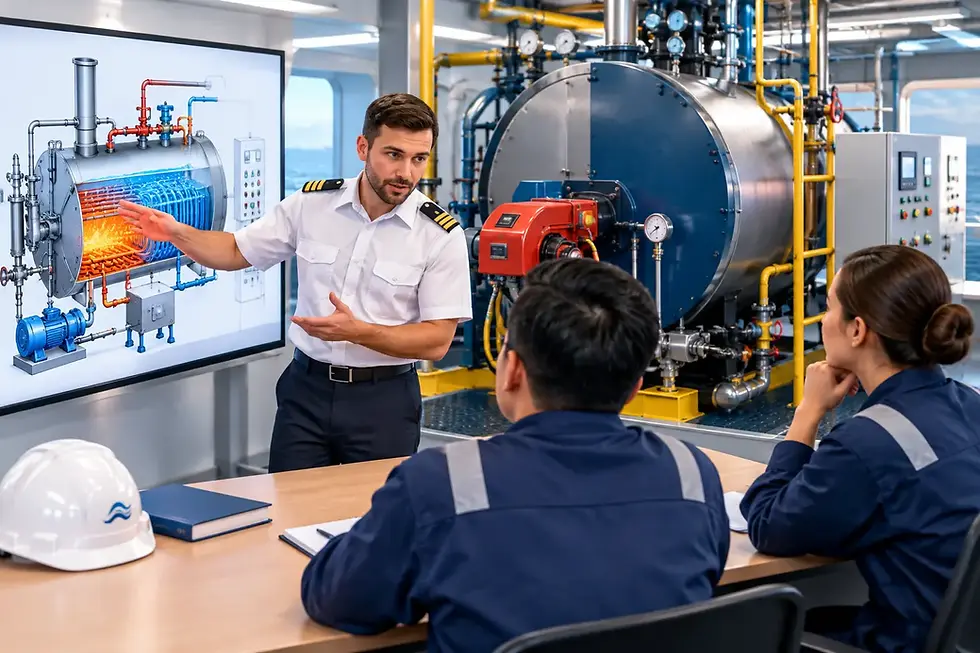
A candidate can often explain the purpose of a boiler safety valve in textbook terms. The oral standard is higher. You may be asked what signs suggest lifting pressure is incorrect, what maintenance precautions apply before testing, what class or company procedures may govern adjustment, and what you would report if repeated lifting occurred at sea.
That line of questioning is typical. The examiner starts with a familiar item, then moves into fault recognition, safe action, reporting and operational impact.
MIN 654 should shape your preparation
MIN 654 matters because it defines the UK oral examination expectations and scope. If your study plan does not align with it, you risk spending too much time on general theory and not enough on examinable competence. Candidates often revise broad engineering science thoroughly while underpreparing on statutory duties, emergency leadership, MARPOL application, permit systems, and practical watchkeeping decisions.
For EOOW level in particular, you need to sound like someone who can safely take and hand over a watch, respond to abnormal conditions, and escalate correctly. For Second Engineer and Chief Engineer candidates, the expected standard shifts upward. The examiner will expect stronger answers on management, prioritisation, defect control, resource use, and the legal responsibilities tied to senior rank.
How to use an IMO model course without becoming scripted
The best use of model course content is to organise your revision into engineering systems and operational themes, then pressure-test each topic out loud.
Take seawater cooling as an example. Start with the system purpose and layout. Then explain common faults such as reduced pressure, high outlet temperature, chest blockage or pump air ingress. After that, move to action under watchkeeping conditions: what alarms may appear, what immediate checks you would make, when you would reduce load, and how you would communicate with the bridge. Finally, tie it back to safety and pollution risk if the fault develops.
That progression - system, fault, action, consequence - is how engineers should revise for oral performance.
The same method works for electrical topics. Do not stop at defining a blackout. Explain likely causes, immediate responses, automatic recovery features, essential services, and how you would manage plant restoration without creating a second trip. If discussing parallel operation, be ready to explain load sharing, frequency control, reverse power protection and practical errors during synchronising. The oral examiner is interested in whether you can manage the plant, not whether you can repeat definitions.
Real-world examples the examiner expects you to handle
Fuel oil contamination
You may be asked what you would do if main engine fuel pumps begin sticking and purifier discharge looks abnormal. A credible answer covers sampling, changeover options, purifier checks, service tank management, filter monitoring, reporting chain and machinery risk. If you jump straight to overhauling equipment without controlling the operational situation, your answer sounds inexperienced.
Crankcase oil mist alarm
No examiner wants a casual answer here. You should explain immediate load reduction as appropriate, increased monitoring, avoidance of unnecessary crankcase opening, adherence to maker's instructions, and the risk of secondary ignition. If asked when to stop the engine, the answer depends on the signs present, the operating condition, and the severity of the indication. This is exactly the sort of area where rigid memorising fails and judgement matters.
Steering failure linked to engine room response
Although steering is often bridge-led initially, engineering candidates must explain power supply checks, hydraulic system awareness, communication with the bridge, standby pump arrangements, and emergency steering readiness. This is a good example of why oral preparation must cross departmental boundaries.
A better way to prepare for MCA oral exam questions
An effective preparation plan for MCA oral exam questions has three parts. First, map your revision to the certificate level and MIN 654 scope. Second, turn every topic into spoken answers rather than silent reading. Third, train for follow-up pressure.
That last part is where many candidates improve quickly with proper coaching. Anyone can answer, "What is a purifier?" Fewer answer well when the next questions are, "Why has throughput fallen? What would you check first? Can you continue operating? What are the consequences if you get this wrong?"
Good preparation should expose weak thinking, not protect you from it.
For engineers preparing in places such as Southampton, South Shields or Glasgow, where many candidates have strong seagoing backgrounds but varied vessel experience, the real benefit of specialist oral coaching is not more notes. It is being challenged in the way the examiner will challenge you.
FAQ
Is the IMO model course enough to pass the MCA engineering oral?
No. It is useful for coverage and structure, but not enough on its own. You still need oral practice, MCA-specific preparation and the ability to apply knowledge under questioning.
How should I revise for the EOOW oral exam in the UK?
Revise by system and by scenario. Build spoken answers around operation, faults, emergency action, legislation and reporting. Use MIN 654 as your reference point for scope.
What does the examiner want in Second Engineer oral questions?
At Second Engineer level, answers should show management of machinery, staff awareness, defect prioritisation, maintenance control and safe operational judgement. Purely technical descriptions are rarely enough.
How do I explain MIN 654 properly in my preparation?
Treat MIN 654 as the guide to what the MCA expects the oral to assess. It helps you align revision to certificate level, practical competence and the examiner's likely lines of questioning.
What is the biggest mistake in oral exam preparation?
Sounding rehearsed and narrow. If your answer only works for one exact question, it will fail as soon as the examiner changes the scenario or asks why.
The right use of an IMO model course engineering oral approach is simple: use it to organise your knowledge, then train until your answers sound like they come from a competent engineer on watch, not a candidate reciting from a folder.


Comments